
 Posted By@planetnews
Emergency dentistry is one of the most demanding areas of clinical practice. A patient may arrive with severe pain, a fractured tooth, uncontrolled bleeding, failed endodontic treatment, implant complications, or an urgent surgical need. In these moments, dentists must think clearly, work efficiently, and make safe decisions under pressure.
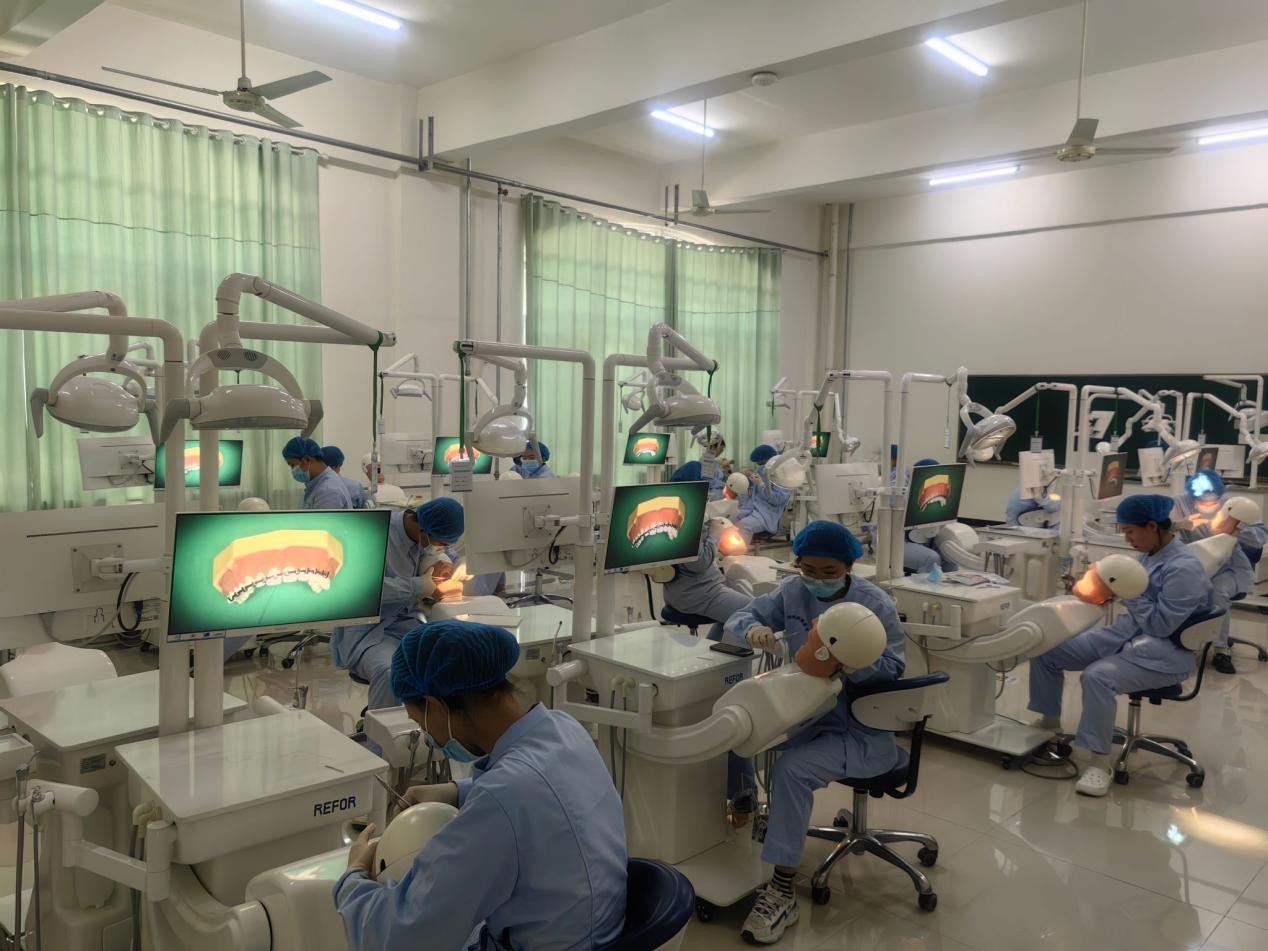
For dental students and young clinicians, this level of confidence cannot be built only through textbooks or observation. Before treating real patients, they need repeated hands-on practice in a controlled environment. This is where an emergency dentistry simulation lab becomes essential.
Unlike a traditional dental laboratory that focuses on fabricating crowns, dentures, bridges, and prostheses, an emergency dentistry simulation lab is designed to reproduce real clinical situations. It allows students to practice diagnosis, treatment planning, anesthesia, surgery, instrument handling, complication management, and chairside digital workflows before they enter the clinic.
Why Emergency Simulation Matters in Dental Education
Clinical dentistry is not only about technical skill. It also requires judgment, preparation, communication, and the ability to respond when something unexpected happens. Emergency cases often involve pain, anxiety, bleeding, broken instruments, failed restorations, or urgent surgical decisions.
A simulation lab gives students the opportunity to make mistakes without harming patients. They can repeat a procedure many times, understand why complications occur, and learn how to correct them. This type of training builds clinical muscle memory and prepares students for real patient care.
For dental schools, the value is clear. A well-equipped emergency simulation laboratory helps bridge the gap between classroom learning and clinical treatment. It gives instructors a structured way to evaluate students’ practical ability, not just their theoretical knowledge.
Typodont Models for Realistic Emergency Cases
A strong emergency dentistry simulation lab depends on the right training models. Dental students need more than standard typodonts with perfect teeth. They need models that simulate actual emergency cases found in dental clinics.
A complete series of typodont dental models may include residual teeth, fractured teeth, wisdom teeth for extraction, post-extraction bleeding models, and missing tooth models for implant placement. Each model supports a different clinical scenario and helps students understand how emergencies present in real practice.
Residual tooth models can be used for extraction training, root removal, and treatment planning. Fractured tooth models allow students to practice emergency restoration, crown fracture assessment, pulp exposure management, and temporary repair. Wisdom tooth extraction models are useful for surgical training, flap design, bone removal, sectioning, elevation, and post-operative management.
Post-extraction bleeding models are especially important. Bleeding control is a common clinical emergency, and students must learn compression, socket inspection, suturing, hemostatic material placement, and patient instruction. A simulation model allows them to repeat these procedures until the workflow becomes familiar.
Missing tooth models for implant placement can simulate urgent implant-related planning, immediate placement concepts, and surgical drilling practice. Students can learn osteotomy preparation, implant positioning, depth control, and bone management in a safe environment.
Explore these typodent trainning dental model at this url, the category includes all types of clinical trainning dental models, and communication/educational models between dentist and patient.
Local Anesthesia Training and Complications
Local anesthesia is a basic clinical skill, but it is also an area where complications can happen. Students must understand anatomical landmarks, injection depth, needle angulation, aspiration, dosage, and patient response.
An anesthesia typodont is highly valuable because it allows students to inject anesthesia liquid into simulated intraoral tissues in the maxilla and mandible. This creates a more realistic training experience than simply learning from diagrams. Students can practice infiltration anesthesia, nerve block techniques, injection positioning, and soft tissue handling.
Simulation can also introduce complications such as failed anesthesia, hematoma risk, intravascular injection concerns, patient discomfort, or incorrect landmark identification. By practicing these situations, students learn how to evaluate why anesthesia failed and what to do next.
Failed Restorations and Endodontic Emergencies
Emergency dentistry often involves failed restorative or endodontic treatment. A patient may present with pain after a filling, fractured restoration, broken post, failed root canal therapy, or separated instruments inside the canal.
Simulation models can help students practice identifying these problems and managing them properly. For endodontic emergency training, dental schools can use models that simulate root canal obstruction, broken files, perforations, or retreatment challenges. Students can learn access refinement, irrigation control, magnification use, ultrasonic activation, and broken instrument retrieval techniques.
Broken tool retrieval is an important advanced skill. In both endodontics and implant surgery, fractured instruments can create serious clinical problems. A simulation lab allows students and professionals to practice retrieval protocols before facing a real patient emergency.
Implant Surgery Complications in Simulation
Implant dentistry is now a major part of clinical practice, and implant-related emergencies require careful training. In a simulation setting, students can practice osteotomy drilling, implant placement, torque control, and complication management.
Possible training cases include incorrect drilling angle, overheating risk, poor primary stability, implant fracture, broken implant drivers, and difficult implant removal. Models can also be used for trephine drill practice, bone harvesting, guided bone regeneration, and surgical site management.
For advanced training, implant surgery simulation can include osteotomy bone drills, osseodensification burs, trephine bone harvester drills, sinus lifting burs, curettes, bone grafting carrier syringes, gingival flap retractors, implant placement tools, and suturing instruments. These instruments help students understand the full surgical workflow instead of practicing only isolated steps.
Preparing the Full Instrument Set Before Simulation
Emergency treatment requires preparation. A student cannot manage a surgical emergency effectively if the required instruments are missing or unfamiliar. Therefore, instrument organization should be part of simulation training.
A complete emergency dentistry simulation setup may include basic diagnostic tools, mirrors, explorers, probes, cotton pliers, suction tips, elevators, forceps, scalpels, periosteal elevators, retractors, hemostats, curettes, surgical burs, implant drills, bone grafting tools, suturing kits, and irrigation systems.
Before each simulation, students should learn how to prepare the full range of dental instruments according to the procedure. This improves efficiency and reduces chairside confusion. It also teaches students the discipline of clinical readiness, which is essential in patient care.
For schools and training centers preparing simulation programs, it is useful to check the Dentsma category collection of dental instruments for different oral emergency dentistry and surgical procedures. A structured instrument collection makes it easier to match tools with extraction, implant placement, bone management, suturing, sinus lifting, and emergency treatment simulation.
The Role of the In-Office Digital Laboratory
Emergency dentistry simulation should not stop at surgical and manual skills. Modern dental treatment increasingly involves digital workflows, and students need exposure to these systems before entering clinical practice.
An in-office dental laboratory can include 3D intraoral scanners, chairside 3D printers, curing lights for printed models, temporary prosthesis production systems, and chairside milling units for permanent restorations. These technologies allow students to simulate emergency digital dentistry from diagnosis to restoration.
For example, after a fractured tooth case, students can scan the mouth, design a temporary crown, print or mill a provisional restoration, and understand how digital tools support urgent treatment. In implant simulation, digital scans can assist with planning, surgical guide concepts, and prosthetic design.
Digital materials are also part of this training environment. Dental students should become familiar with 3D printing resins, zirconia, lithium disilicate, PMMA, PEEK, and other modern dental materials. Understanding material indications helps students choose the right solution for temporary and permanent clinical needs.
These dental lab supplies, training typodont models, digital CAD/CAM materials, modern digital laboratory equipment, and teaching models are available from the trusted digital platform Dental Laboratorio at dentallaboratorio.com. The platform offers a full range of laboratory supplies: teaching and training models, instruments, digital laboratory equipment, and materials for dental education and clinical simulation.
Building Better Clinical Confidence
An emergency dentistry simulation lab is not just a room with dental models and instruments. It is a learning system. It prepares students to think like clinicians, respond to complications, and work safely before treating patients.
For dental students, repeated simulation builds confidence. For dental professionals, it supports continuing education and advanced procedural training. For dental schools, it creates a more complete bridge between theory and patient care.
The future of dental education will depend on realistic, procedure-based training. By combining emergency typodont models, anesthesia simulation, surgical instruments, implant tools, endodontic complication models, and in-office digital laboratory equipment, schools can create a learning environment that reflects the real challenges of modern dentistry.